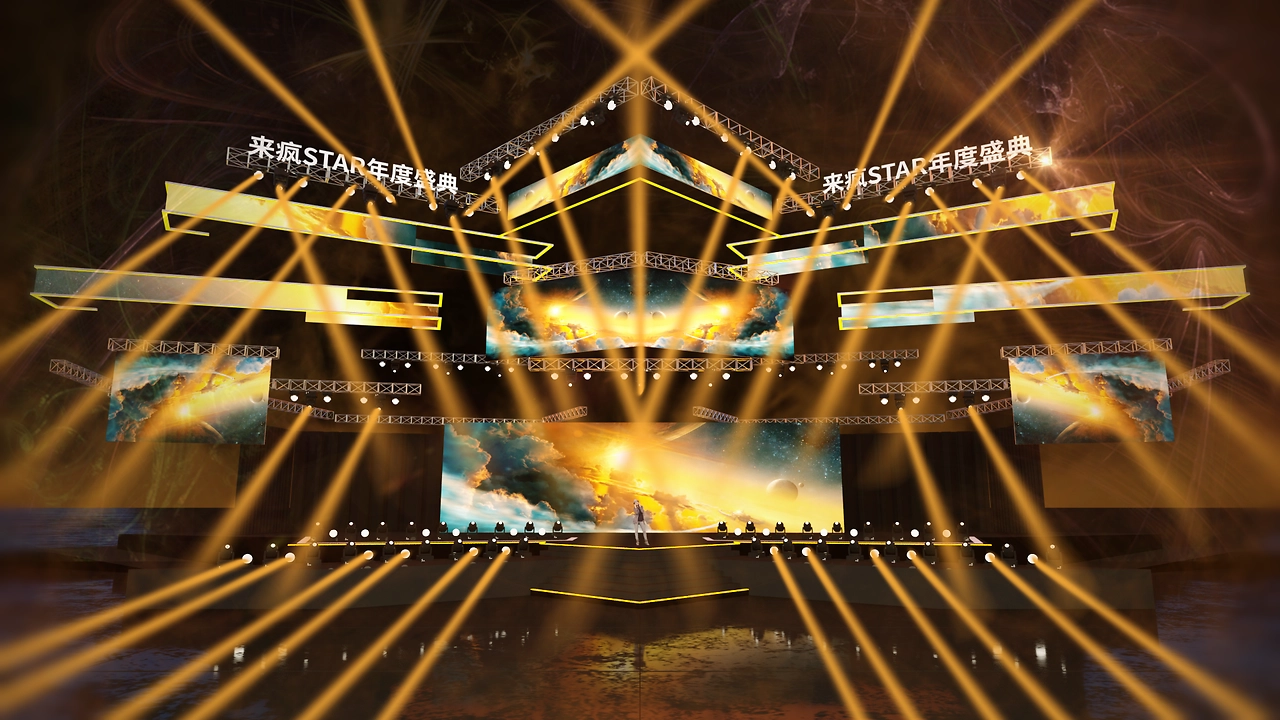
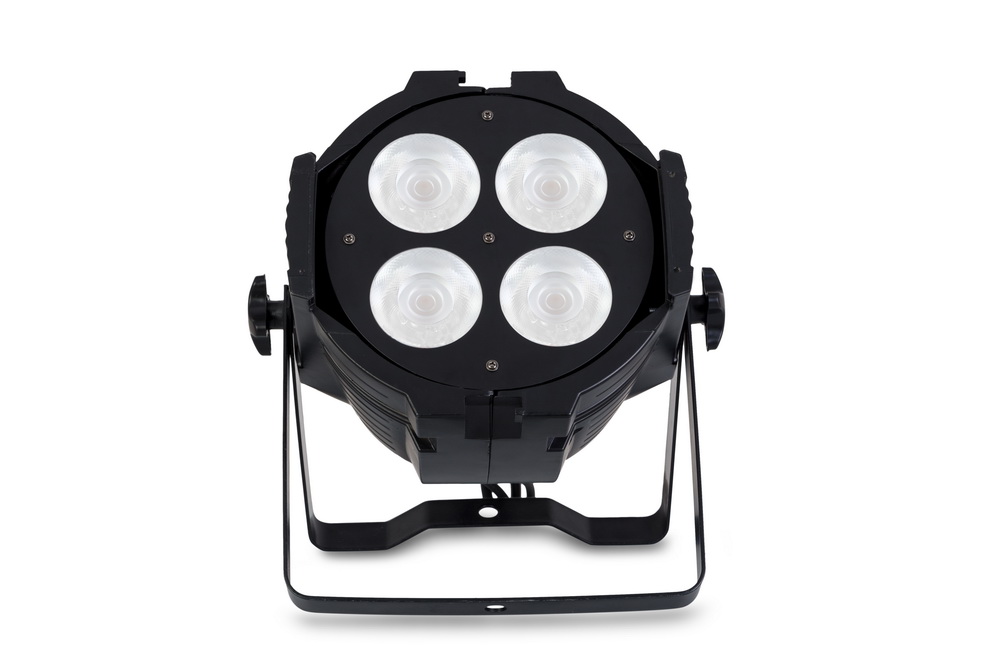
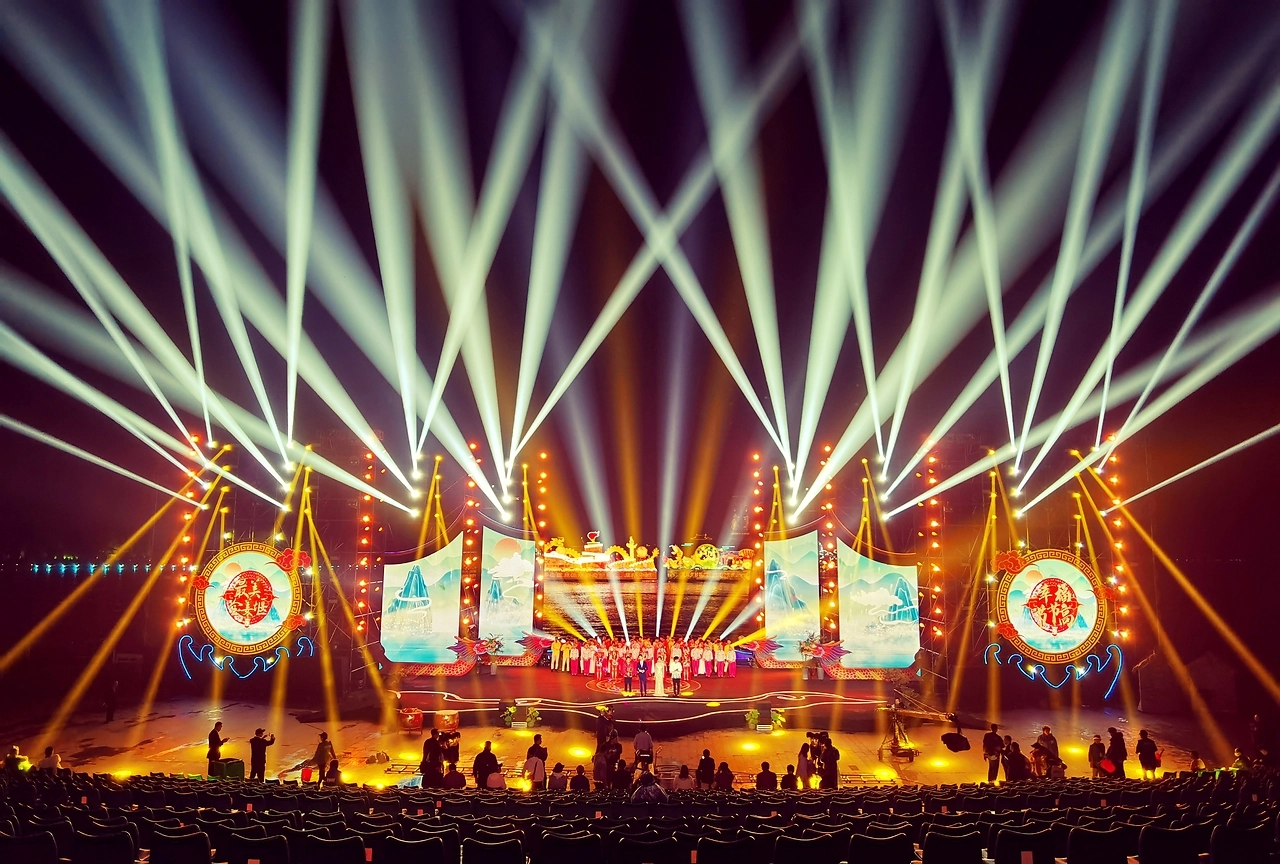
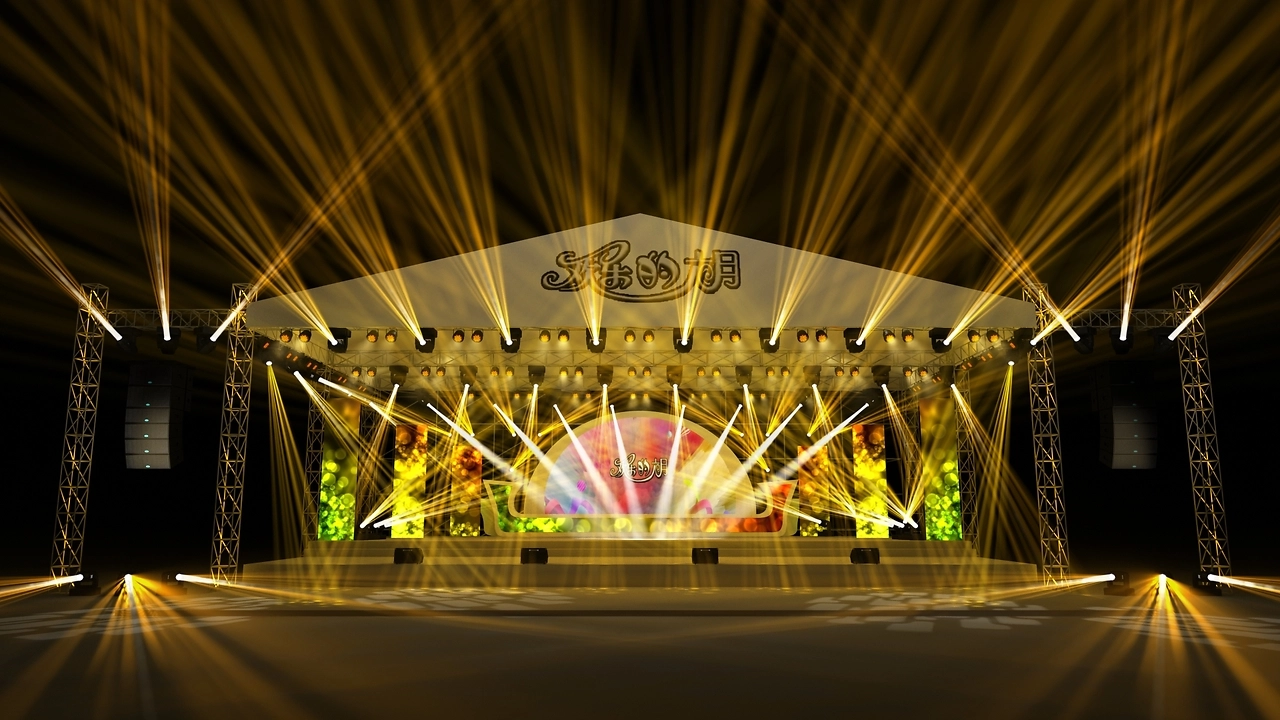
Stage lighting design is a part of theater architecture Whether the treatment of each lighting position can be integrated into the theater design to form an excellent whole is a joint consideration between designers and architects
one
Whatsapp:+86 134 1860 8878
Due to the diverse forms of theater, the placement of lights may vary depending on the theater format. As a stage lighting designer, it is necessary to achieve excellent unity between form and content while meeting the functional requirements of the stage.
two
Actors are the main body of the performance, and their faces should be well illuminated when they are active in the main performance area. For lighting positions in the performance area, a horizontal elevation of 1.7m from the dance table (the height of the general human eye) is required as the lighting reference, known as the "effective lighting range".
three
According to the performance rules, the depth and function of the stage are divided as follows: the first one-third is the main performance area, the middle one-third is the secondary performance area, and the last one-third is the scenic area (background area). According to this law, the stage lighting positions also have basic division of labor for performance lighting: the outdoor lighting positions (face light, outer light) are mainly used for lighting the characters in the front and middle one-third of the stage space; The entrance lighting (entrance top light, entrance side light) is mainly used to illuminate the characters in the middle and back one-third of the stage space. This is only a general concept and commonly used spatial relationship, and does not imply that any performance uses space in this way. But as a stage lighting design, this factor should be taken seriously.
four
The design of each lighting position on the stage must ensure that there is enough installation space to accommodate a certain number of lamps according to the scale of the stage. Lighting fixtures have two spatial concepts of horizontal and vertical rotation, and the design of the installation space for lighting fixtures must consider both rotation factors (including the addition of color changers, shutters, and other accessories).
five
Due to the wide variety and continuous development of lighting fixtures. Provide flexible and adjustable structures as much as possible for the installation space of each lamp position. If a fixed structure is used, the distance between the upper and lower lamp posts in the hanging lamp space should not be less than 90cm, and the distance between the left and right should not be less than 70cm. The hanging lamp posts should be uniformly made of seamless steel pipes with a diameter of 50-60mm. The lighting fixtures should be hung on round rods with hooks and equipped with safety chains.
six
The installation of each lighting fixture should be concealed as much as possible, except for architectural or performance forms that require exposure, so that the audience cannot see the light source and operation as much as possible. Each lamp position is designed to provide good working conditions, convenient access, and safety facilities for the installation, maintenance, and handling of lighting equipment by lighting operators as much as possible. To do a good job in designing professional stage lighting positions and selecting suitable stage lighting equipment, it is important to first understand the stage lighting positions, which is a crucial step.
Basic knowledge of stage lightingCommon lamp positionsfront lighting
Installed at the top of the audience hall outside the stage curtain. The light is projected from the front onto the performance area in front of the stage, and the light position that illuminates the actors' faces is called face light. It can achieve universal brightness, eliminate the "dead corners" that are prone to occur in the picture, and adjust the light ratio to increase or decrease contrast to show balance and avoid local underexposure. But if this type of light is not used in conjunction with other light sources, it will lack brightness levels and stereoscopic effects. Therefore, surface lighting can only serve as basic illumination and color tones, and does not play a major role on stage. It cannot become the main light and a tool for shaping images.
Whatsapp:+86 134 1860 8878
The lighting pattern is generally divided into
Parallel projection or left-right cross projection
Side low position surface light (cantilever light)
Whatsapp:+86 134 1860 8878
The stage lighting is usually set at the front end of the second floor of the audience seating area, which can increase the overall brightness of the front of the stage. The use of floodlights can illuminate the stage and the audience seating area near the stage. Picking up the stage light can provide auxiliary lighting for television broadcasting and conference news reporting. The light is projected from both sides and the lower front onto the stage performance area, which is a supplement to the "surface light".
Slapping (light outside the stage)
The light is directed from the side towards the light positions in the stage performance area, which are respectively called left and right slaps. Used to enhance the three-dimensional sense of characters and scenery, create a front and side lighting effect, and produce a shaping effect. If combined appropriately with the light ratio in the dark areas, it can achieve a rich and powerful shaping effect. The human perspective is most sensitive to changes in side lighting, which is the main light source for both characters and scenery, and an important tool for shaping; The main focus is on design, with lighting as a supplement. In order to achieve vertical lighting, there should be no less than 2 lights horizontally. Two or more rows of slaps with the same light color are projected simultaneously, with high positioned lights usually focusing on the high beam area and low positioned lights usually focusing on the low beam area. The slap light can be installed openly or placed in the slap room. The slap room should not obstruct the passage of the audience and not block the line of sight of the side audience. The horizontal angle formed by the projection of the light axis extending from the edge of the stage frame to the performance area and the central axis of the stage should not exceed 45 degrees, so that the side audience can see the side frame of the stage without affecting the sound transmission of the stage speaker.
Whatsapp:+86 134 1860 8878
Taikou side light (column light)
Column lighting is used to compensate for the shortcomings of surface lighting and slap in the face lighting. Choosing appropriate lighting fixtures can also be used as close range follow-up lighting. In addition, a row of effect lights is hidden at the entrance of the building, providing a more flexible means of expressing the lighting effects inside the stage. On both sides of the stage entrance curtain, lighting fixtures are installed on "telescopic movable platform", "vertical iron pipes" or "fixed iron frames". The stage false platform entrance (upper section) is equipped with a lighting bridge, and the side panels have side lighting positions (column lights).
The arrangement and projection method of the lighting fixtures are basically the same as those of a slap
Side light of pedestrian bridge (suspended cage light, bridge light)
The side lights of the pedestrian bridge are located on one level of the pedestrian bridge on both sides of the stage, or on the entire side facade from the elevation of the pedestrian bridge on one level to the ground near the stage, commonly known as "pedestrian bridge side lights", abbreviated as "bridge lights", "inner side lights", "side lights". Some lights are installed inside the suspended cage called "cage lights" or on the suspended ladder called "ladder lights". The lighting task of the overpass side light is basically consistent with the requirements of the platform side light, and is interconnected. There are generally three ways of lighting: backward projection, projection towards the local area, and forward projection. The side lighting of the pedestrian bridge has a strong ability to shape characters and three-dimensional scenery. Contemporary sky bridges often adopt vertical lighting systems, with high lights projected towards the distance and low lights projected towards the nearby area. The position of the side light forms a 90 degree angle with the illuminated object when viewed from the audience's position. This type of light can highlight the surface structure of an object; Create a half light and half dark facial effect on objects or characters, giving people a feeling of "firmness and strength". The styling light from one or both sides can emphasize and highlight the contour of the side, suitable for expressing volume effects such as reliefs and portraits. Unilateral light may show a strong effect of yin and yang, while bilateral light can show a personalized splint light, but it is necessary to adjust the light ratio between the front auxiliary light and the side light to achieve a more complete styling effect.
Ground side light (flowing light)
Flowing light is a type of "mobile light" on the stage, usually placed on both sides of the stage in conjunction with the pedestrian bridge side light or used alone as a decorative light. This type of light has a high utilization rate and strong styling ability. The position of the flowing light forms a 90 degree angle with the actor's perspective from the audience's position. This lamp can highlight the surface structure of objects, and the projected light has a strong three-dimensional shape.
top lighting
Top light is a vertical projection of light from top to bottom, which is not suitable for illuminating people. This type of light position, when used with diffused light fixtures and soft light paper or gauze, becomes soft light, providing general illumination to the scenery and serving as a "base light". It can provide uniform brightness to scenery, props, and the ground, and can appropriately reduce or eliminate the chaotic shadows formed by light from other light positions. Usually, a dedicated lighting boom is installed every 3 meters in the depth of the stage boom. The power supply hangs from the stage ceiling, and a wire basket is provided in the middle of the boom to accommodate cables. The lighting fixtures are hung below the boom. The spotlight at the top of the backstage is usually installed on a movable light bridge and a dedicated lighting boom, mainly projecting onto the performance area in the middle and rear of the stage. The lights installed on the suspension rod in sequence from the eaves curtain at the entrance to the back of the platform are one top light, two top light, three top light, etc. Among them, the top light of the entrance is located on the upper edge of the building entrance, adjacent to the lamp position behind the curtain, also known as "one top light" or "fake entrance top light". The basic lighting should be connected with the surface lighting. The lighting method should also be consistent with the surface lighting. This lamp position also takes into account special lighting in the performance area, such as key lights, special effects lights, chasing lights, etc. The top light of the music pool shines vertically from top to bottom, serving as the stage lighting in front of the large screen after the music pool rises.
footlight
Foot light is a strip lamp installed at the lip of the stage outside the curtain, which projects light upward from the stage onto the actor's face or is used to illuminate the lower part of the curtain after the closing ceremony. Generally, strip floodlights or low angle spotlights are used.
Before the introduction of electric light sources into theaters, light sources such as oil lamps, candles, and gas lamps were installed on the lip and floor of the stage as the main lighting positions for performances, which can also be said to be the earliest lighting positions for frame style stages.
The flat painted scenery or curtain decoration hanging above the performance area can be projected from bottom to top using the foot light (spotlight or diffuse light) at the entrance of the stage; The foot light at the entrance of the platform usually works well as a large curtain lighting effect.
This type of light effect has heavy artificial traces and should not be used alone unless there are special environments and requirements.
Backlight
The backlit beam falls on the actor's head and shoulders, which can highlight the actor from the stage background.
The light opposite the position of the audience is called backlight, at a 180 ° angle. This type of light is often used to depict the silhouette effect of objects or people.
Backlighting is generally used to outline contour lines, separating the subject or person from the background, creating a sense of spatial depth, and giving the image a non rigid and lively feeling.
Sky light (background light)
The sky light is divided into two types: sky light and earth light. The projection methods include forward projection, reverse projection, and a combination of forward and reverse projection.
Tian Pai Guang illuminates the sky from top to bottom, usually by installing several sets of high-power floodlights on the suspension rod. Some fixed configurations have several colors suitable for the sky (such as deep blue, emerald blue, green, light blue, magenta, etc.), while others choose colors according to the needs of the play.
In some large and medium-sized theaters, the skylight adopts the form of a suspension bridge, which is equipped with a large number of floodlights. At the same time, there are also projection slides and special effect lights inside the suspension bridge.
The lighting fixtures can be used in strip or single lamp combinations and can be installed in one or two rows. The interior of the row can also be divided into upper and lower layers, and the lighting requirements are balanced and uniform. It is specifically used for sky background lighting with downward projection.
Ground mounted light, placed on the front panel of the sky canopy or in a specially designed trench for upward projection of the sky canopy. It can be used to depict the horizon, horizon, sunset, etc. It is usually used in conjunction with sky lights to make color changes more diverse.
chasing the light
Chasing light can adjust the aperture size, color, brightness, virtual and real functions.
While moving with the actors during the performance, enhance the brightness of the lighting to increase the audience's attention and achieve partial lighting of the actors' bodies, entire bodies, long distances, and small areas. Sometimes, chasing light can also be used to create abstract and illusory feelings.
The location for chasing light can be set on the front and sides of the second floor of the audience seat, as well as on both sides and the back of the stage performance area where styling needs to be. There are also enclosed dedicated chasing light rooms set up at the top ceiling of the audience seat and at the back of the audience seat.
Special Effect Light
Special effects lighting generally refers to the effects of the sun, moon, stars, wind, rain, lightning, flashlight light, or prop lights in the scene, such as oil lamps, candles, electric lights, or the lighting effects in specific areas of strong light in the picture. The specific placement depends on factors such as the structure of the performance space and the performance situation.